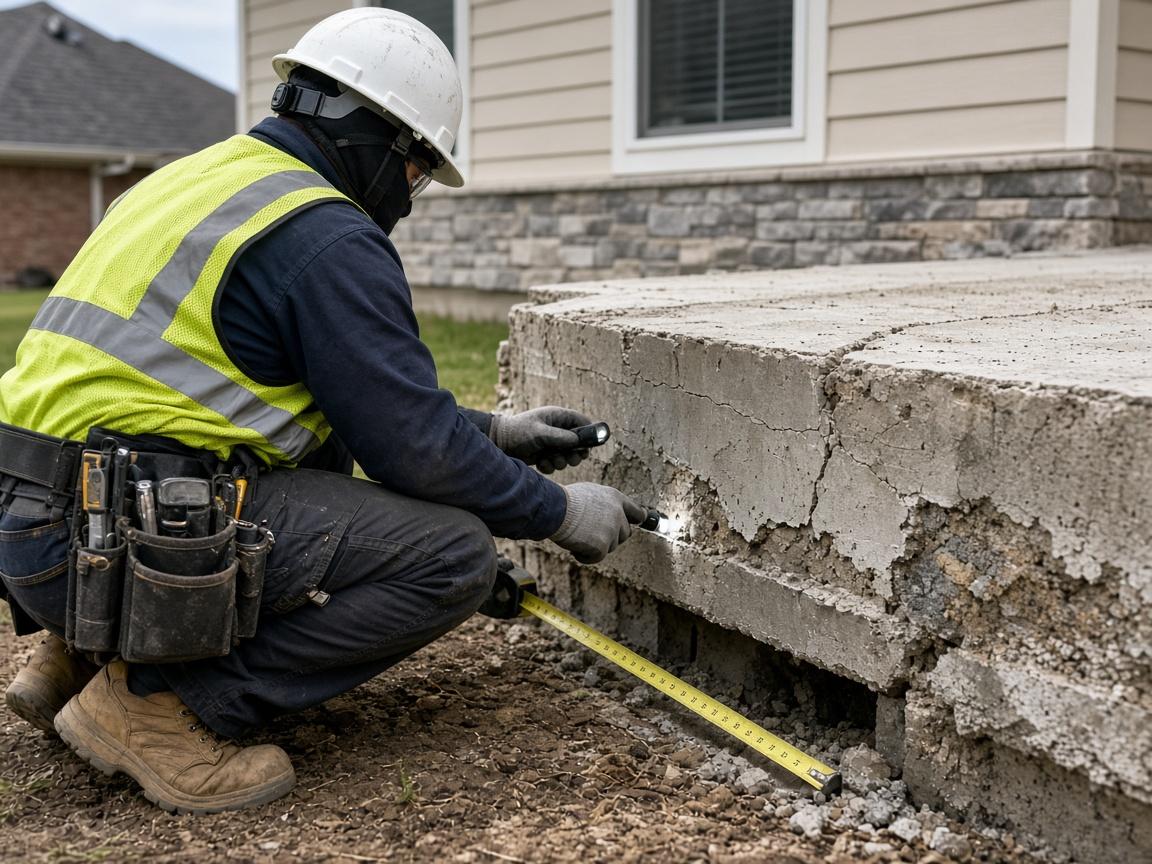
Sticking doors, wall cracks, and sloping floors aren't just cosmetic. Here's how to spot foundation trouble early and what to do about it.
Austin homeowners sit on some of the most active soil in the United States. The Blackland Prairie clay that underlies most of the metro swells in rain and contracts in drought — and that movement is relentless. Over time, it shifts foundations. The question isn't whether your foundation will be tested by Austin's soil; it's whether you'll catch the warning signs before minor movement becomes major repair.
Here are the seven clearest warning signs your Austin home has a foundation problem — and what each one tells you about what's happening below.
1. Diagonal cracks at door and window corners
This is the most diagnostic crack pattern for foundation settlement. A 45-degree crack radiating from the corner of a door or window opening isn't random — it follows the direction of tensile stress created when the foundation beneath that opening drops relative to the adjacent sections. If you see this crack in interior drywall, it means the foundation beneath it has settled.
2. Stair-step cracking in exterior brick
Brick isn't a structural material — it's a veneer that follows whatever the structure beneath it does. Stair-step cracking in the mortar joints (following the brick course up and to one side) means the foundation edge beneath that section has dropped. The brick is separating along the weakest path: the mortar joints. This is one of the most visible and reliable exterior indicators of foundation movement.
3. Doors that stick or won't close properly
A door frame is a rectangle, and doors are manufactured to fit precisely within it. When foundation movement distorts the frame — racking it out of square — the door no longer fits its opening. Summer sticking is especially telling: the clay soil dries and the foundation settles, pulling the frame out of square. By winter, some movement recovers, and the door works again. If you notice a seasonal sticking pattern, you have active clay-driven movement.
4. Floors that slope or feel uneven
A marble placed on a level floor shouldn't roll. If it does — if furniture migrates, if water flows in unexpected directions, if you feel a hill inside your house — your floor has elevation differential. A 1-inch drop over 10 feet is noticeable. A 2-inch drop over 8 feet starts to affect door function and wall cracking. We measure floor level at every inspection with a digital level and create a full elevation map.
5. Gaps between walls and ceilings (or floors)
As a foundation settles, the structural load paths shift. Walls that were perfectly connected to the ceiling begin to separate. Baseboards pull away from the floor. These gaps aren't a drywall finishing problem — they're structural. The gap opens where the movement is greatest.
6. Cracks in the slab itself
Hairline cracks along pour joints are usually shrinkage cracks — normal and not structural. But long diagonal cracks that run across tile or the slab surface at an angle are settlement cracks. Even more concerning: cracks with vertical displacement, where one side is higher than the other. If you can feel a step in the crack with your foot, that's significant differential movement.
7. Water pooling next to the foundation after rain
This isn't technically a damage symptom yet — it's a precursor. Water ponding against your foundation saturates the adjacent clay, which triggers the wet-dry cycle damage described above. If you consistently see water against the foundation edge after rain, your drainage is directing water toward the foundation rather than away from it. Fix this before it causes structural damage.
If you're seeing any combination of these signs — especially stair-step brick cracking combined with sticking doors — schedule an inspection. Foundation problems don't resolve themselves. The soil will keep moving, the cracks will keep growing, and the repair cost will keep climbing.
Foundation Specialists — Austin, TX