Foundation Leveling & Lifting in Austin
Restore your floors to level — hydraulic lifting for settled and sunken foundations.
About This Service
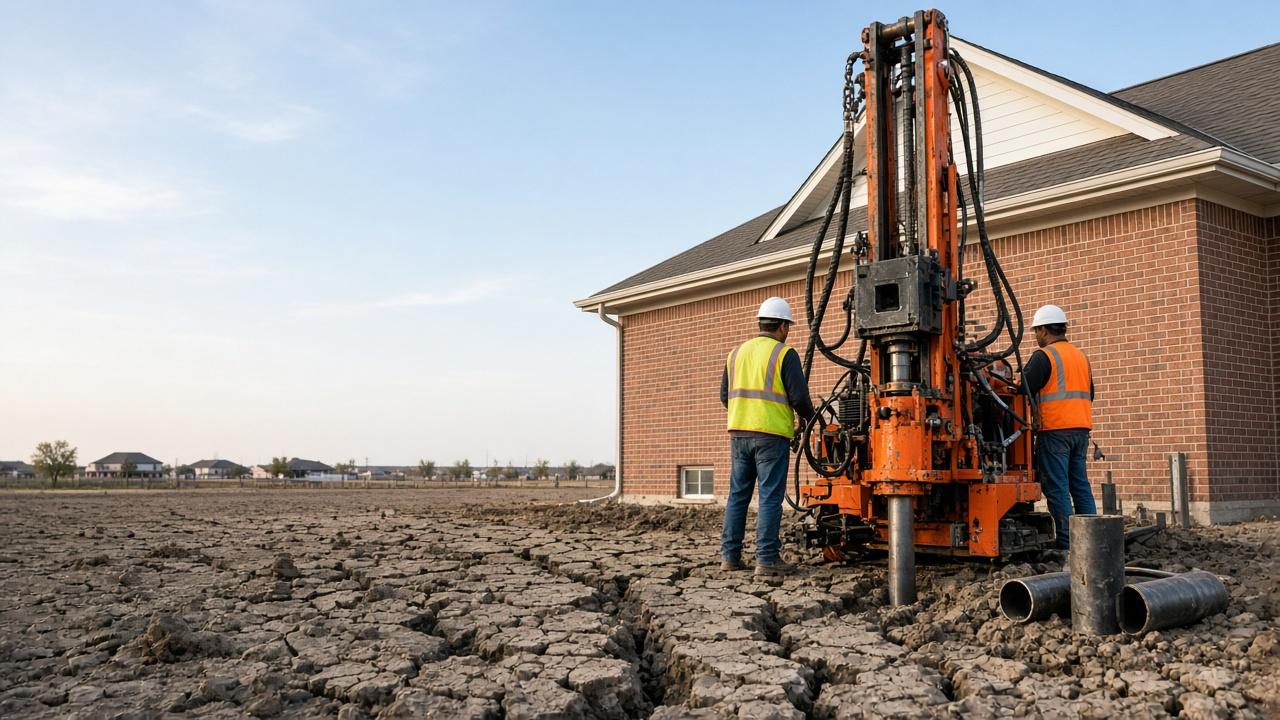
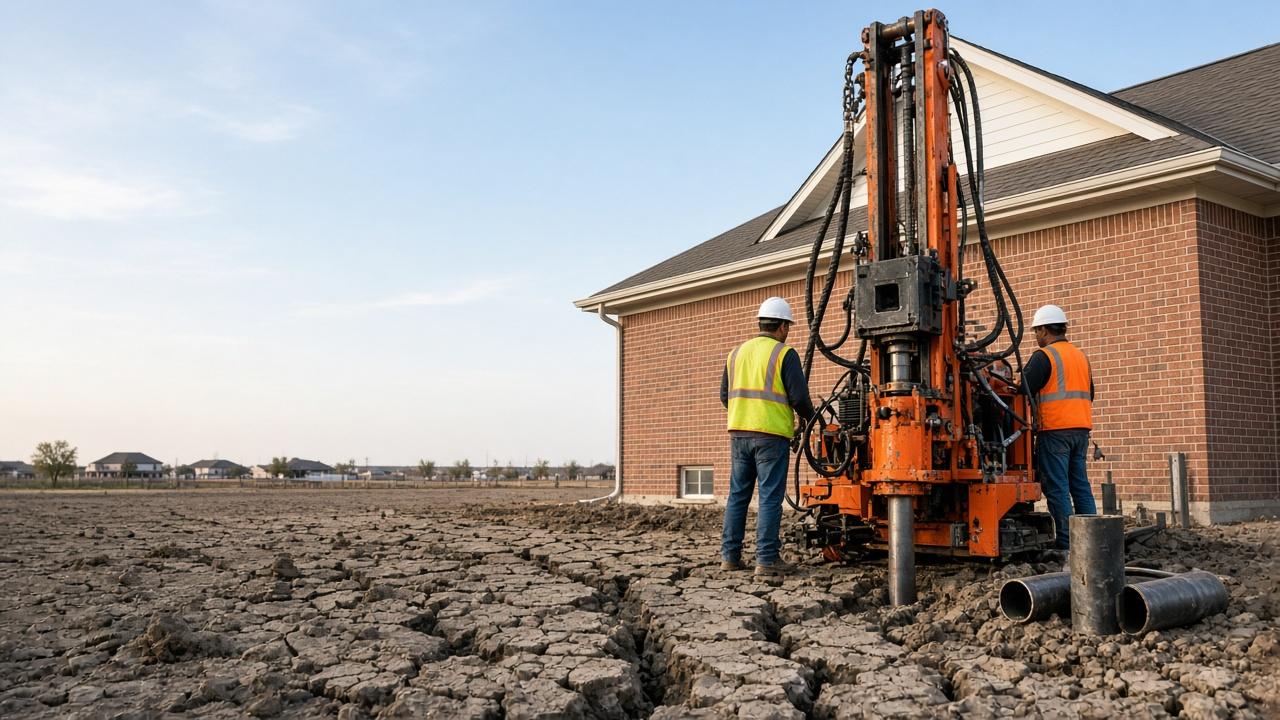
Foundation leveling — also called foundation lifting or re-leveling — is the process of returning a settled foundation to its original or closest achievable elevation using hydraulic pier systems. It's not the same as repair from scratch; it works with the existing foundation, transferring its load to stable soil deep below the active clay zone.
When done correctly, leveling eliminates the obvious symptoms — sloping floors, sticking doors, wall cracks — and stops further settlement. It doesn't turn back the clock on cosmetic damage, but it arrests the structural progression and creates a stable platform for cosmetic repairs.
Why This Happens in Austin
Foundations settle for one primary reason in Austin: the soil beneath them can no longer support the structural load. Clay soil in drought conditions loses volume, creating voids. Water-saturated soils become weaker. Improperly compacted fill soils under new construction consolidate over years. In each case, the foundation is carrying more weight than the soil can handle, and settlement occurs.
The solution isn't to make the soil stronger — you can't. The solution is to bypass the problematic soil entirely by driving piers deep enough to reach soil (or rock) that is mechanically stable regardless of moisture content. In Central Texas, that typically means reaching the Austin chalk formation at 10–20 feet depth, or dense clay sub-strata that are below the seasonal moisture variation zone.
How the Repair Process Works
- 1Elevation survey: We establish existing floor elevations across the full foundation using digital levels. This creates a three-dimensional picture of the settlement pattern.
- 2Target elevation plan: We establish realistic target elevations for the lift — not necessarily the original construction elevation, since some recovery may not be achievable without risking other structural issues.
- 3Pier installation at settled zones: Piers are installed at the foundation perimeter and interior (if required) beneath the settled sections only. Stable sections of the foundation are left alone.
- 4Simultaneous hydraulic lift: All jack points are loaded simultaneously and lifted in small, controlled increments. This uniform approach prevents localized cracking during the lift.
- 5Monitoring during lift: We monitor drywall, tile, and structural indicators during the lift. If cracking risk increases, we pause and assess before continuing.
- 6Lock-off and documentation: After reaching target elevation, piers are locked at load and a final elevation survey is conducted. We document before and after elevations in a written report.
Warning Signs You Need This Repair
- Floor elevation differential greater than 1 inch from highest to lowest point
- Visible slope that's immediately apparent when you enter a room
- Tile or hardwood floors cracking along lines that follow the settlement direction
- Interior walls that appear to lean or bow when viewed from a corner
- Kitchen or bathroom cabinets that have pulled away from the wall at the top
- Sliding glass doors that jump off their tracks due to frame distortion
Austin Soil Context
Austin's clay soil active zone extends 6–10 feet deep. Steel push piers driven to 12–20 feet bypass this zone entirely. Helical piers can be installed to similar depths without requiring heavy equipment access — important for Austin's narrower historic lots and gated backyards.
Frequently Asked Questions
Can you level a foundation without piers?
For minor settlement, mudjacking (pressure grouting) can fill small voids under a slab and provide some lift. But mudjacking doesn't address active clay movement — the material injected is still vulnerable to moisture changes. For any settlement more than an inch or with an identifiable active cause, deep pier installation is the appropriate solution.
Will leveling crack my tile?
Poorly managed lifts can crack tile. We lift in small increments and monitor tile condition throughout. If tile is already cracked from settlement, the lift itself may open those cracks slightly as the slab moves. We'll discuss tile risk honestly before work starts.
My house has settled 2 inches in one corner. Can that be fully recovered?
Often yes — 2 inches is significant but well within the range we routinely recover. The determining factor is how long the settlement has been occurring. Recent settlement (1–5 years) recovers more fully than 20-year-old movement where the structure has 'adapted' to the settlement. We'll give you a realistic target range before we start.
Austin Foundation Repair Pros serves Austin and 14 surrounding communities with licensed foundation repair crews. Every repair starts with a free written assessment — no pressure, no surprises, no upselling.
Get a Free Estimate
Tell us what you're seeing. We'll schedule a free on-site inspection and give you a written diagnosis.
Request Estimate Online (512) 601-5288What You Get
- Stops active settlement permanently — not a temporary patch
- Restores floor elevation across settled areas for comfort and aesthetics
- Reduces cosmetic damage progression — doors and windows start working again
- Transferable pier warranties provide documentation value for home sales
- Typically completed in 1–3 days with minimal disruption to the home
Service Area
Austin and surrounding communities including Round Rock, Cedar Park, Pflugerville, Georgetown, Leander, Kyle, Buda, Hutto, Lakeway, Dripping Springs, San Marcos, Bastrop, Manor, and Bee Cave.