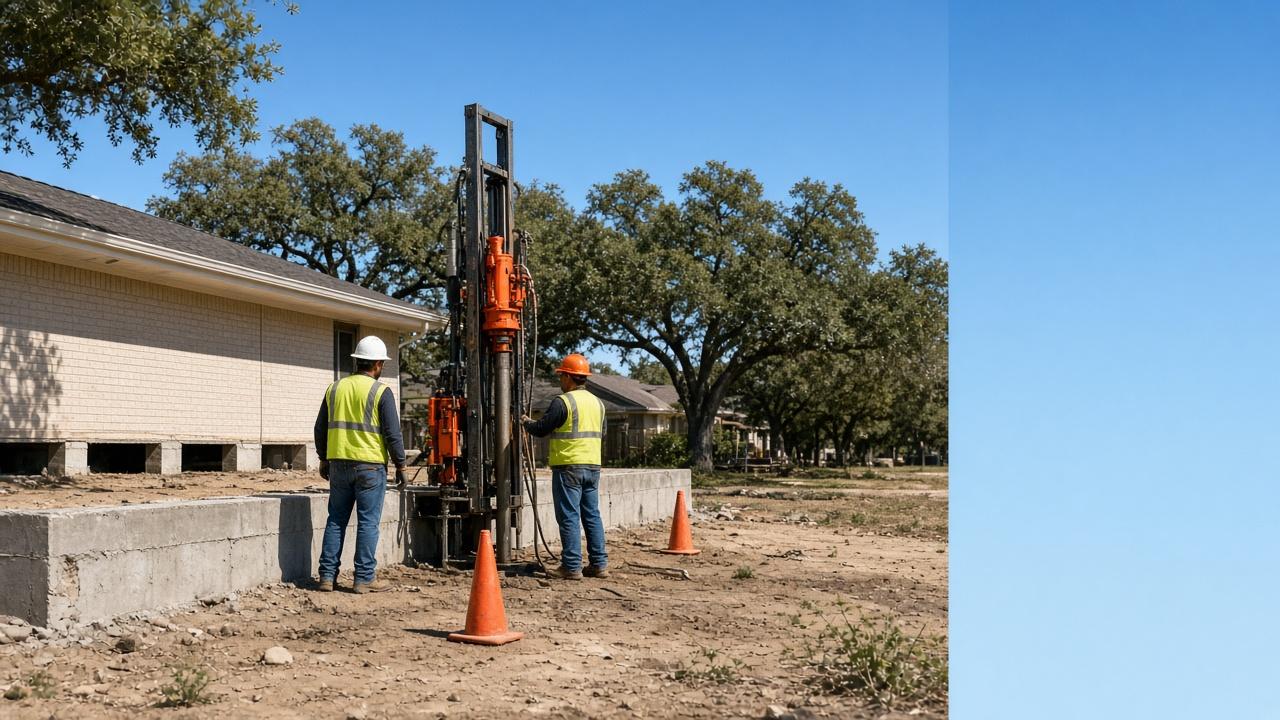
Foundation Repair in Austin, TX
Expert slab, pier and beam, and structural foundation repair — free estimates, same-week scheduling.
About This Service
Foundation repair in Austin isn't one-size-fits-all. The city spans four distinct geological zones: the Blackland Prairie clay belt in the east and north, the Austin chalk formation through the middle, the thin limestones of the Balcones Escarpment in the west, and the sandy transitional soils of the southeast. Each zone has different failure patterns, different warning signs, and different repair requirements.
On the prairie, slab foundations crack because the clay swells in wet seasons and contracts violently during the summer droughts Austin sees every few years. In the hill country west of MoPac, the problem shifts — thin soils over limestone mean drainage and slope stability matter more than clay management. In older east-side neighborhoods, pier and beam homes settle gradually as wood deteriorates and soil erodes under crawl spaces.
Whatever your zone and whatever your foundation type, the correct repair starts with an accurate diagnosis. Throwing piers at every problem is the industry norm; correctly identifying whether the issue is active soil movement, drainage failure, tree root intrusion, or structural overload — and addressing the root cause — is what separates a lasting fix from a patch that fails in three years.
Why This Happens in Austin
Austin averages 34 inches of rain per year, but it comes unevenly — intense spring storms followed by weeks of 100°F+ heat. That wet-dry cycle is the engine behind most Austin foundation movement. The Blackland Prairie clay (technically a Houston Black soil series) has a COLE index — Coefficient of Linear Extensibility — between 0.09 and 0.15. For context, anything above 0.06 is considered "high" by USDA standards. Austin's clay soil routinely hits three times that threshold.
During a dry summer, the clay below your foundation can shrink enough to leave voids — unsupported zones where the slab is essentially bridging empty space. When the first heavy rain hits, the clay rehydrates and pushes back unevenly. That cycle — shrink, void, load, push — is what creates the diagonal cracks at door corners and the stair-step brick patterns that Austin homeowners recognize.
How the Repair Process Works
- 1Initial inspection: We walk your property exterior and interior. We measure floor elevations at 5-foot intervals using a digital level, map crack locations, and assess drainage patterns.
- 2Soil and site analysis: Based on crack type, location, and floor elevation data, we determine whether the settlement is active, historic, or cyclical — and which part of the foundation is the source.
- 3Repair design: For slab foundations, this typically means a specific pier layout — interior and exterior piers positioned to transfer load to stable soil below the zone of seasonal movement (usually 8–12 feet deep in Austin). For pier and beam, we assess each individual pier and beam member for load capacity and condition.
- 4Pier installation: Steel push piers or helical piers are installed using hydraulic equipment. Each pier is driven or screwed to refusal — meaning to the depth where the required load is confirmed by hydraulic pressure.
- 5Lift and level: With piers at load-bearing depth, we hydraulically lift the settled sections of the foundation back toward original elevation. Not all movement is fully recoverable, but we optimize for structural stability first and aesthetic level second.
- 6Drainage and prevention: After the structural repair, we assess whether poor drainage contributed to the problem. If so, we design a drainage solution that runs alongside the pier repair.
Warning Signs You Need This Repair
- Diagonal cracks running from door/window corners at 45-degree angles
- Stair-step cracking in brick or block exterior walls
- Horizontal wall cracks (more serious — indicates lateral soil pressure)
- Floors that feel spongy, uneven, or visibly sloped — measurable with a level
- Doors or windows that stick, bind, or won't close flush without force
- Visible gaps between the floor and baseboards, or between walls and ceilings
- Visible slab cracks inside the home — especially long diagonal cracks
- Water pooling within 3 feet of your foundation after rain
Austin Soil Context
Austin's Blackland Prairie clay has a plasticity index of 50–80 — meaning it can absorb and release water with extreme volume changes. The active zone (where seasonal moisture change occurs) typically runs 6–10 feet deep in Central Texas. Steel piers installed to 12–20 feet bypass this zone entirely, anchoring in stable substrate that doesn't move with the seasons.
Frequently Asked Questions
How many piers does an average Austin slab foundation need?
It varies significantly. A 1,500 sq ft home with moderate settlement in one corner might need 6–8 piers. A 3,000 sq ft home with widespread settlement across multiple sections could need 18–24. The number is determined by the footprint of the settled area, the load per pier, and the desired lift target.
Can foundation repair affect my plumbing?
Yes — this is one of the most important pre-repair conversations. Lifting a settled slab can shift plumbing pipes. If your pipes are already cracked or disconnected from settlement, lifting can make it worse. We recommend a plumbing pressure test before and after any lift. If we identify plumbing risk, we'll flag it upfront.
Will my homeowner's insurance cover foundation repair?
Standard homeowner's policies almost universally exclude foundation repair caused by soil movement, drought, or settlement. Sudden, accidental damage (like a burst pipe that undermines the slab) may be covered. You'll need to check your specific policy, but don't count on coverage for soil-related settlement.
How do I find a legitimate foundation repair company in Austin?
Look for TXLBP (Texas Licensed Plumbing Board) exemption if piers go through plumbing zones, SOFA membership (Structural Operations Foundation Association), valid Texas contractor license, and verifiable insurance. Ask for references from the same neighborhood. Be cautious of any company that won't provide a written scope of work before asking you to sign anything.
Austin Foundation Repair Pros serves Austin and 14 surrounding communities with licensed foundation repair crews. Every repair starts with a free written assessment — no pressure, no surprises, no upselling.
Get a Free Estimate
Tell us what you're seeing. We'll schedule a free on-site inspection and give you a written diagnosis.
Request Estimate Online (512) 601-5288What You Get
- Permanent load transfer to stable soil below the problem zone
- Restored floor elevations and door/window function
- Stops active settlement — preventing costs from compounding
- Protects home resale value — a repaired foundation with documentation sells
- Eligible for disclosure-compliant transfer warranties
- Often required by lenders before financing a home sale
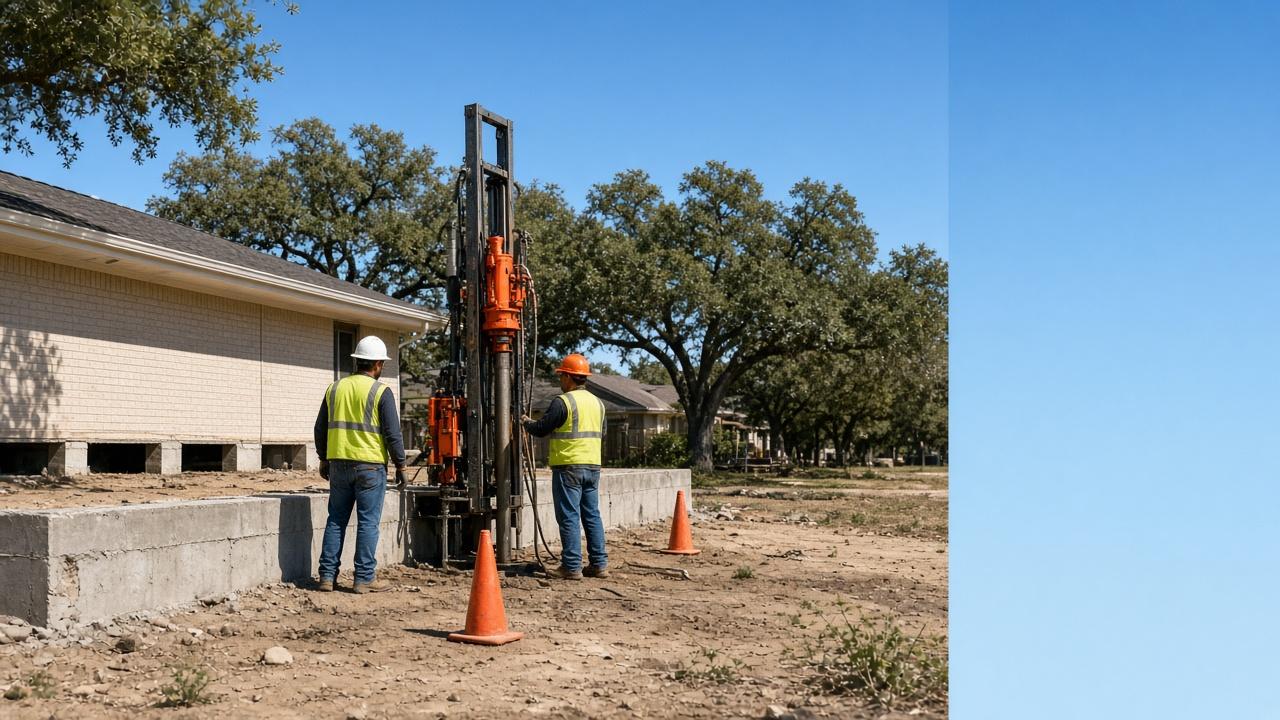
Service Area
Austin and surrounding communities including Round Rock, Cedar Park, Pflugerville, Georgetown, Leander, Kyle, Buda, Hutto, Lakeway, Dripping Springs, San Marcos, Bastrop, Manor, and Bee Cave.