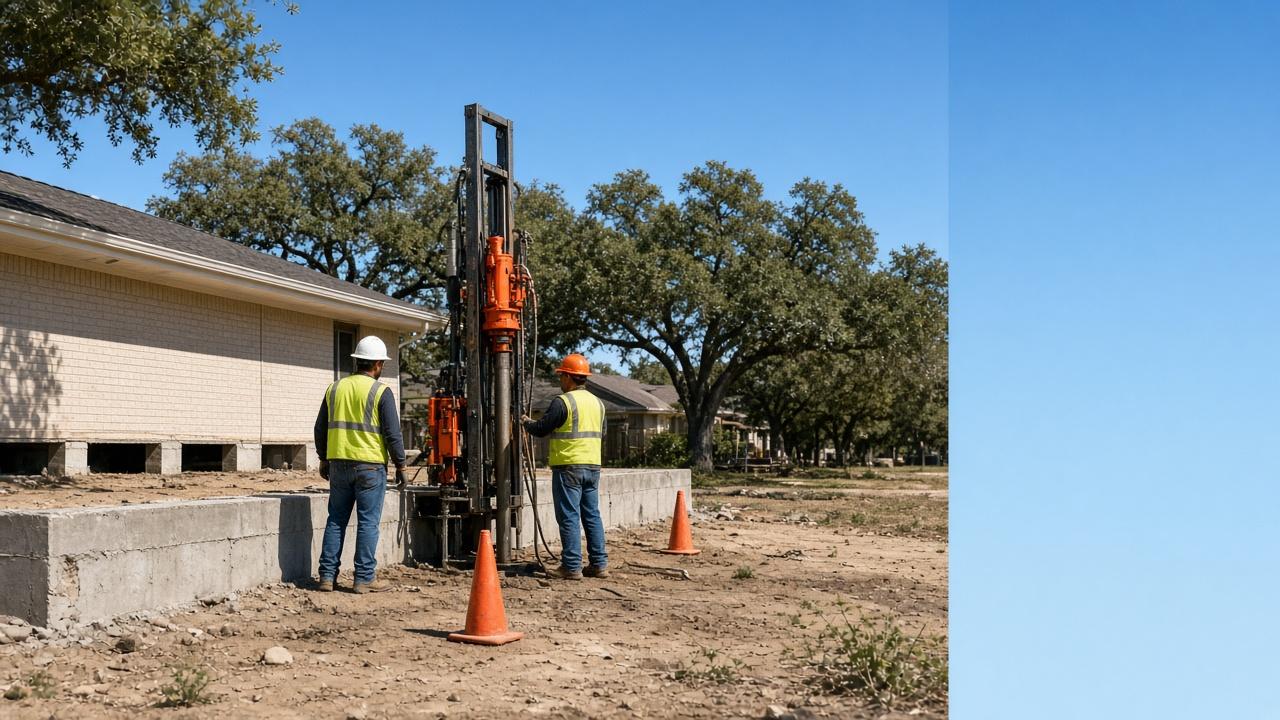
Foundation Settlement Repair in Austin
Diagnose and permanently correct foundation settlement — before it costs you tens of thousands more.
About This Service
Foundation settlement repair addresses one of the most misunderstood concepts in residential structural repair: the difference between historic settlement and active settlement. Historic settlement is movement that occurred years or decades ago and has since stabilized. Active settlement is ongoing movement that will continue and worsen without intervention.
The repair strategy is completely different for each. Stabilizing a historically settled foundation (where the movement has stopped) requires little more than documentation and possible cosmetic repair. Stopping active settlement requires identifying why the soil is continuing to move — and addressing that root cause alongside the pier installation.
Why This Happens in Austin
Settlement becomes a repair emergency when it's differential — when one part of the foundation drops more than the adjacent sections. A uniform settlement of 1 inch across the entire foundation causes little structural stress. A 1-inch differential settlement over 8 feet of foundation span creates significant bending stress in the slab or beam.
Austin homeowners often notice settlement first through the symptoms it creates rather than by seeing it directly. A door that was fine in spring starts sticking in August — that's the clay soil drying and shrinking, causing the corner of the foundation to drop. By November, the door might work again — the clay has re-wetted. But each cycle leaves a little more permanent settlement behind.
How the Repair Process Works
- 1Differential measurement: We measure floor elevations at a 5-foot grid across the home. The resulting elevation map shows the settlement bowl — where the low points are and how severe the differential is.
- 2Active vs. historic determination: We review evidence of ongoing movement: crack widths, displaced items (furniture that has shifted, cabinets that have separated from walls), and the homeowner's history of symptom onset and progression.
- 3Root cause analysis: What's causing the settlement to continue? Common culprits in Austin: drainage directing water to one side of the foundation, a large live oak root system absorbing soil moisture, plumbing leak undermining soil, or a soil layer that's still consolidating under a newer addition.
- 4Root cause remediation: Before piers go in, we address what's causing the active settlement. Redirecting drainage. Identifying and routing plumbing leaks. Advising on tree management.
- 5Pier installation at settled zones: Steel or helical piers are installed at the documented low points, sized and positioned to transfer the full dead and live load to competent bearing strata.
- 6Post-repair monitoring plan: For active settlement cases, we establish a monitoring baseline and recommend a follow-up elevation check at 6 and 12 months post-repair.
Warning Signs You Need This Repair
- Cracks that open wider in summer and partially close in winter — indicates active clay-driven movement
- Settlement symptoms that are getting noticeably worse year over year
- Recent changes near the foundation: large tree removal, new addition, plumbing work, new irrigation
- Water pooling or concentrated drainage adjacent to a foundation corner or edge
- A newly purchased home with disclosed prior foundation repair that appears to be re-settling
Austin Soil Context
Active settlement in Austin is predominantly driven by clay moisture content. The active zone — where soil moisture changes seasonally — runs to approximately 8–10 feet depth in Central Texas. Deep piers that extend below this zone transfer load to material that doesn't change with the seasons. The settlement stops because the load is no longer carried by soil that moves.
Frequently Asked Questions
My foundation was repaired five years ago and it's settling again. Why?
Re-settlement after repair usually means one of three things: the root cause wasn't addressed, the piers weren't driven deep enough to bypass the active zone, or a new failure mode has developed (a new plumbing leak, a new drainage problem). We investigate each re-settlement case with a full root-cause review, not a simple add-more-piers approach.
Can foundation settlement damage my plumbing?
Yes — this is one of the more expensive consequences of extended settlement. Differential movement shifts slab-embedded pipes, creating joint separations or direct fractures. If your home has significant settlement, a plumbing pressure test is a smart precaution before and after any lift work.
How do I know if a seller's foundation repair was done right?
Ask for the engineering report from the repair — it should include pier locations, depths, hydraulic pressure logs, and before/after elevation surveys. Ask whether a follow-up elevation check was done. Look for symptoms of ongoing settlement (new cracks, sticking doors) that post-date the repair. We can do a pre-purchase foundation inspection and evaluate prior repair quality.
Austin Foundation Repair Pros serves Austin and 14 surrounding communities with licensed foundation repair crews. Every repair starts with a free written assessment — no pressure, no surprises, no upselling.
Get a Free Estimate
Tell us what you're seeing. We'll schedule a free on-site inspection and give you a written diagnosis.
Request Estimate Online (512) 601-5288What You Get
- Root cause identification prevents repair failure from recurring movement
- Differential settlement correction protects structural integrity of the slab and frame
- Documented elevation baseline allows future monitoring without repeat inspections
- Addresses both structural stabilization and the drivers of future movement
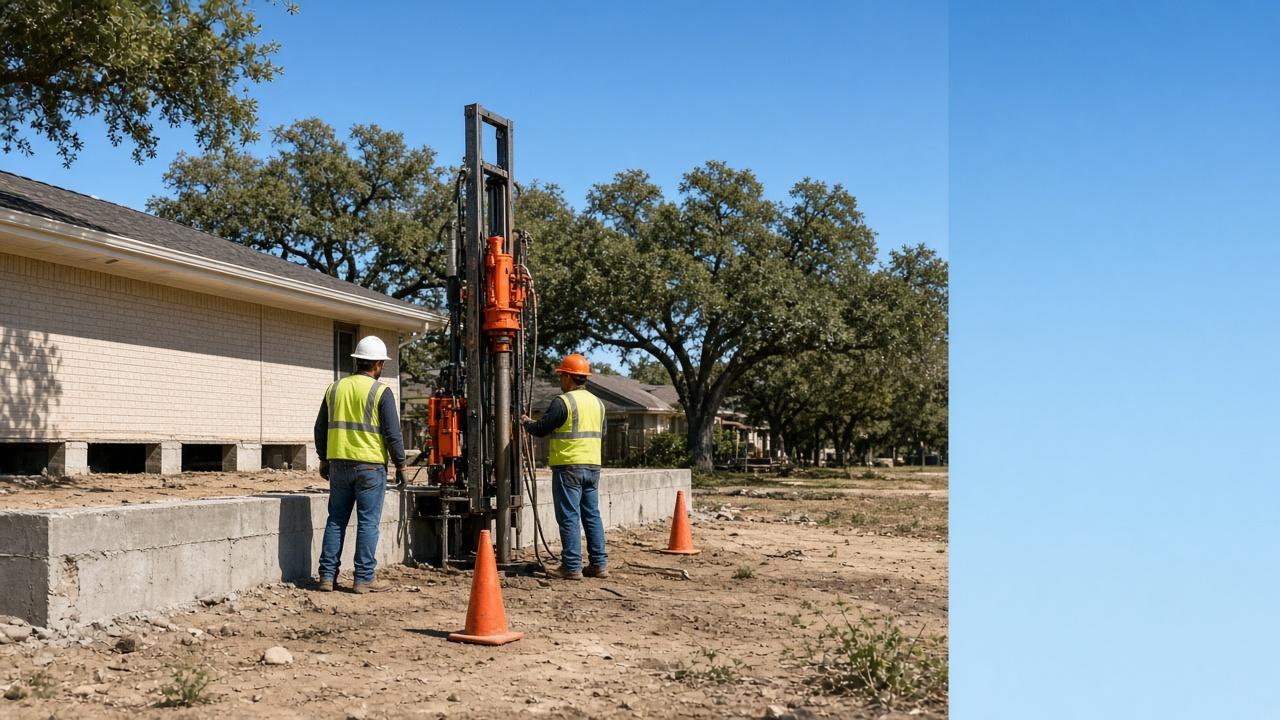
Service Area
Austin and surrounding communities including Round Rock, Cedar Park, Pflugerville, Georgetown, Leander, Kyle, Buda, Hutto, Lakeway, Dripping Springs, San Marcos, Bastrop, Manor, and Bee Cave.