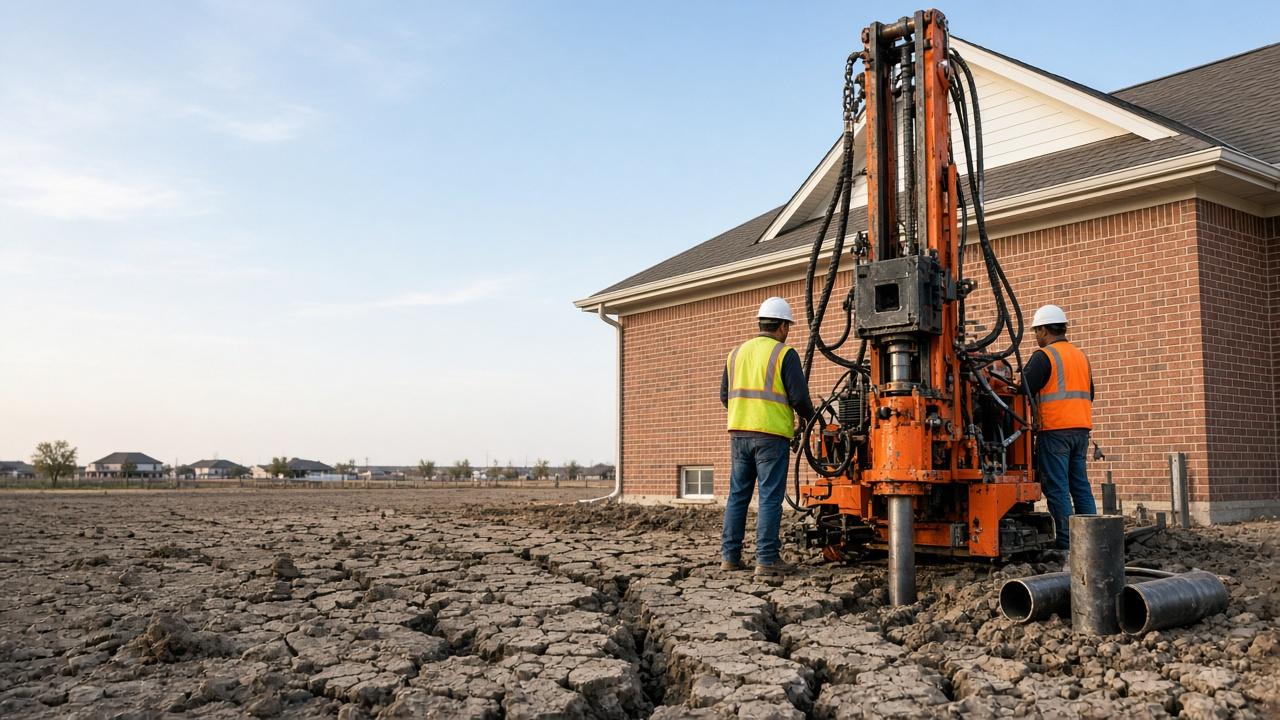
Steel Push Pier Foundation Repair in Austin
Heavy-duty push piers driven to load-bearing strata — the gold standard for serious foundation settlement.
About This Service
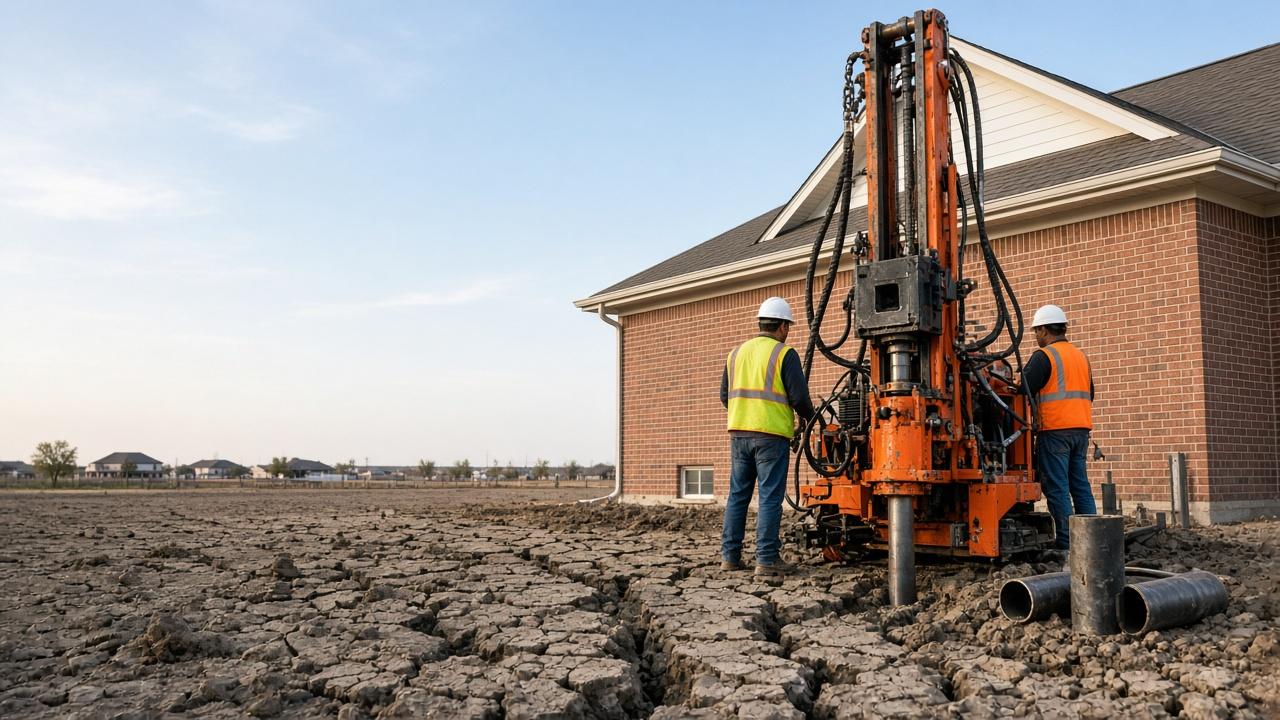
Steel push piers are the most widely used deep foundation repair system in Texas residential foundation repair — and for significant settlement on heavier structures, they're typically the most effective option. A push pier system consists of a series of steel pipe sections that are hydraulically driven into the ground using the structure's own weight as reaction force, until they reach bedrock or dense load-bearing strata.
The key advantage is simplicity and absolute capacity verification: when the pier stops advancing under hydraulic pressure — when it reaches refusal — you know with certainty it's at a bearing layer that won't move. That's a fundamentally different confidence level than piers driven to a predetermined depth.
Why This Happens in Austin
Push piers are the workhorse of Austin foundation repair because Austin's geology is well-suited to them. Below the active clay zone, Austin sits on the Austin chalk formation — a soft marine limestone that provides excellent bearing capacity and doesn't compress under structural loads. Push piers driven to refusal in Austin chalk stay put. Period.
The system has been proven in Central Texas over decades of use through multiple drought-flood cycles. The pier bracket connects directly to the foundation footing, load is transferred cleanly from the slab to the steel shaft, and the pier section connections are mechanically positive — they can't pull apart under load.
How the Repair Process Works
- 1Excavation at pier locations: We excavate a small pit at each pier location — typically 18x18 inches and 24 inches deep — to expose the foundation footing.
- 2Bracket installation: A steel bracket is positioned against the footing face and temporarily held in place. This bracket becomes the load transfer mechanism between foundation and pier.
- 3Hydraulic driving: Steel pipe sections are driven hydraulically using a drive head that sits on the bracket. Section after section is added and driven as the pier advances deeper.
- 4Refusal monitoring: A calibrated hydraulic pressure gauge monitors driving pressure in real time. When driving pressure exceeds the calculated threshold (determined by the foundation load), the pier has reached adequate bearing capacity.
- 5Simultaneous lift: After all piers at the settled zone are driven to refusal, hydraulic jacks at each bracket lift the foundation simultaneously in small increments.
- 6Lock-off: After reaching target elevation, each bracket is mechanically locked to the pier shaft. The jacks are released, and the foundation weight transfers permanently to the pier system.
- 7Backfill and cleanup: Excavations are backfilled and tamped. Any disturbed landscaping is restored to approximate original condition.
Warning Signs You Need This Repair
- Settlement greater than 2 inches in any area of the foundation
- Settlement that has accelerated — dropping visibly faster than in previous years
- Settlement in a heavier structure: two-story home, commercial building, or masonry structure
- Foundation where piers are needed but helical pile equipment cannot access
- Settlement adjacent to a pool or below-grade structure where soils were disturbed
Austin Soil Context
Austin chalk provides exceptional push pier bearing. Unlike soft alluvial deposits in coastal Texas, Austin's subsurface transitions from active clay to competent limestone within a reliable depth range. This makes push piers in Austin unusually effective compared to other Texas metros where the soil profile to bedrock is more variable.
Frequently Asked Questions
How many push piers does my Austin home need?
Pier count depends on the length of settled foundation perimeter, the pier spacing required for the structural load, and whether interior piers are needed. A settled perimeter section of 30 feet might require 4–6 exterior piers. A 2,000 sq ft home with full-perimeter settlement might need 16–24 piers. We calculate the minimum required count based on actual load data.
Will push pier installation damage my landscaping?
Each pier location requires an 18–24 inch excavation. We try to locate piers in landscaping-minimal areas where possible. Excavations are hand-tamped and returned to approximate grade after installation, but expect some surface disturbance within 2 feet of the foundation at each pier location.
Are push piers transferable if I sell my house?
Yes. The piers stay with the property. Manufacturer warranties for pier systems are typically transferable to new homeowners, which is a positive disclosure item in a sale. We provide a stamped engineering report documenting the repair scope, pier depths, and hydraulic pressure readings.
Austin Foundation Repair Pros serves Austin and 14 surrounding communities with licensed foundation repair crews. Every repair starts with a free written assessment — no pressure, no surprises, no upselling.
Get a Free Estimate
Tell us what you're seeing. We'll schedule a free on-site inspection and give you a written diagnosis.
Request Estimate Online (512) 601-5288What You Get
- Absolute capacity verification — pier is driven until the structure's load is confirmed supported
- Immediate load transfer — no cure time, no waiting
- Handles heavy structural loads that exceed helical pier capacity ranges
- Permanent installation — corrosion-resistant steel sections with mechanical connections
- Documented with hydraulic pressure logs for engineering records
Service Area
Austin and surrounding communities including Round Rock, Cedar Park, Pflugerville, Georgetown, Leander, Kyle, Buda, Hutto, Lakeway, Dripping Springs, San Marcos, Bastrop, Manor, and Bee Cave.