Slab Foundation Repair in Austin, TX
Post-tension and conventional slab repair by Austin specialists who know Texas clay.
About This Service
Slab foundation repair in Austin is the most common type of structural repair request we handle, and for good reason — the vast majority of Austin homes built after 1960 sit on concrete slabs. But not all slabs are the same.
Conventional reinforced slabs are the older type — a single layer of reinforced concrete, typically 4–6 inches thick, poured on grade. Post-tension slabs became the standard in Austin by the 1980s and 1990s because they handle clay soil movement better — steel cables under tension run through the slab and are stressed after curing, creating a pre-compressed concrete that resists cracking.
When a post-tension slab cracks, it's usually from severe differential settlement — one area of the slab dropping significantly relative to another. When a conventional slab cracks, the threshold for cracking is lower. Both types are repairable, but the repair approach differs.
Why This Happens in Austin
Austin's Blackland Prairie clay is the primary driver of slab damage. The Technical Guide for Foundation Design in Expansive Soils (U.S. Army Corps of Engineers) specifically cites the Texas Blackland Prairie as one of the highest-risk expansive soil environments in North America.
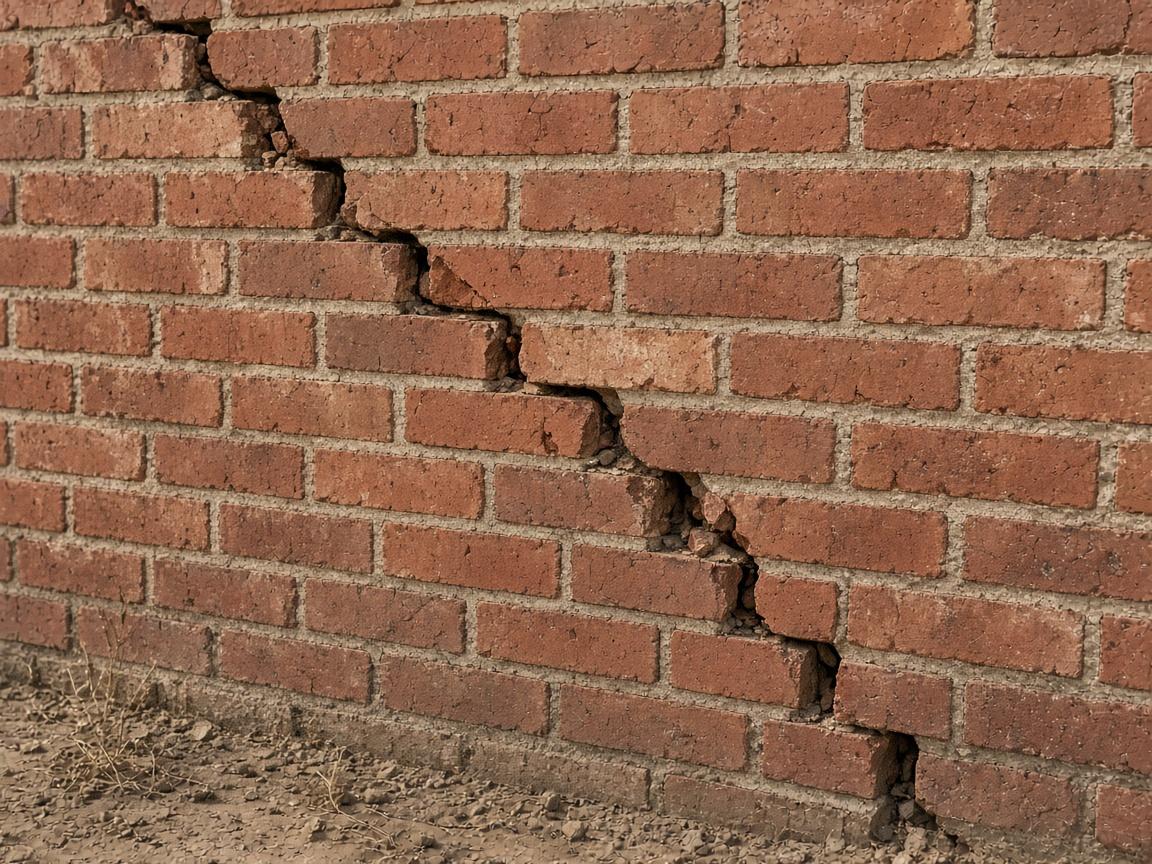
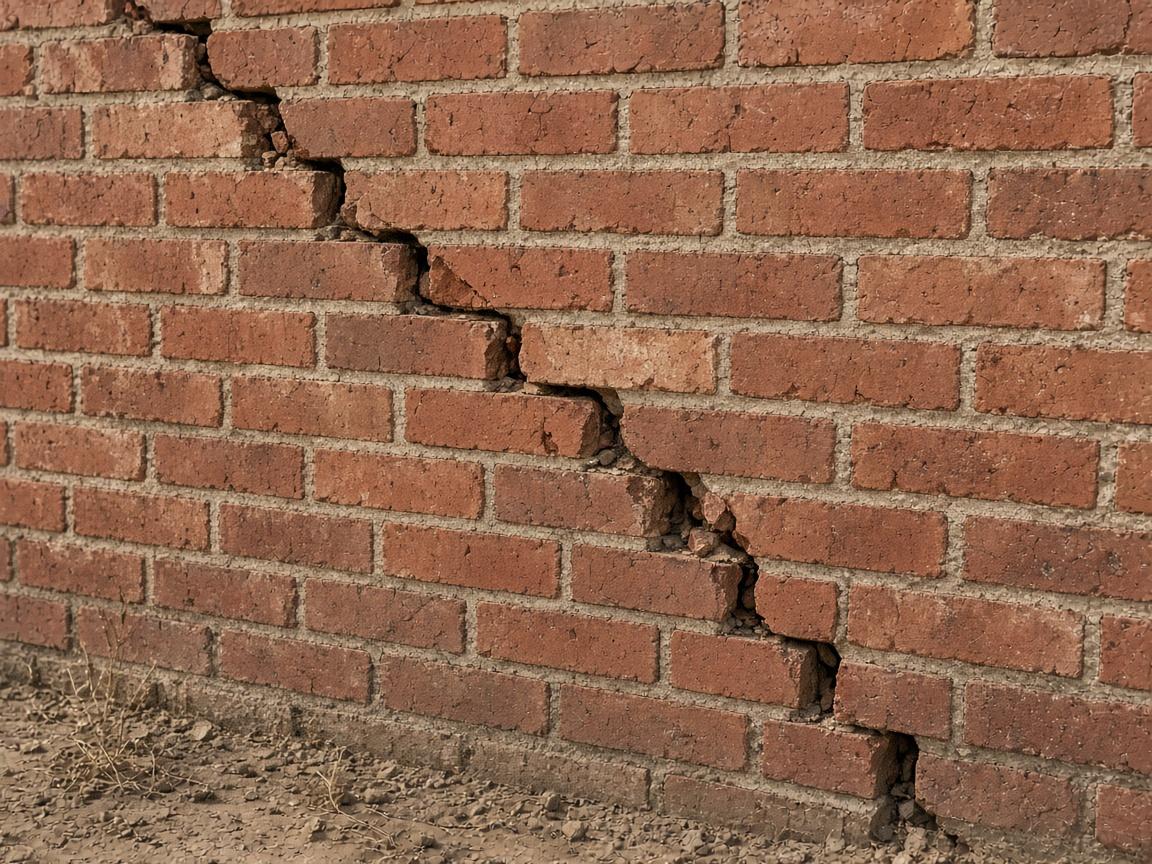
When soil below a slab loses moisture during drought, the clay shrinks and creates a void. The slab is designed to span short distances, but large voids create spans the slab wasn't engineered for. The result is cracking — typically in a diagonal pattern that follows the direction of differential settlement. In post-tension slabs, you may see fewer cracks but more severe settlement because the cable tension holds the slab together longer before releasing.
How the Repair Process Works
- 1Slab type verification: We identify whether your slab is conventional or post-tension. Post-tension slabs require special care around cable zones — piers must not be placed through active cable paths.
- 2Elevation mapping: We create a floor-level map across the full footprint, identifying the high points (original elevation) and low points (settled areas). This map drives the pier placement plan.
- 3Exterior pier installation: Most slab repair starts at the perimeter — steel piers or helical piers are installed through a small excavation at the exterior beam. These support the slab edge where most settlement occurs.
- 4Interior pier installation: When the interior of the slab has settled (identified by floor sag away from walls), we core through the slab at calculated interior positions and install deep piers.
- 5Controlled hydraulic lift: All piers are loaded simultaneously during the lift phase to create a controlled, uniform rise. Lifting too fast or unevenly risks cracking tile, drywall, or plumbing.
- 6Void fill: After lifting, voids created by the settlement (under the slab) are pressure-grouted to prevent future re-settlement.
Warning Signs You Need This Repair
- Long diagonal cracks running through tile or concrete floors
- Cracks at the corners of door and window openings in interior walls
- Visible step-down between floor areas (especially living room vs. bedroom)
- Tile popping or grout cracking along lines that mirror settlement movement
- Walls that lean or feel out of plumb
- Exterior concrete beam (the exposed slab edge) showing cracks or spalling
Austin Soil Context
Post-tension slabs became Austin's preferred foundation type because conventional slabs cracked too frequently under Blackland Prairie clay movement. But even post-tension cables can only resist so much differential settlement. When clay voids grow large enough — often after multiple consecutive drought years — post-tension slabs lose their fight against gravity too.
Frequently Asked Questions
What's the difference between a post-tension and conventional slab repair?
The pier installation is similar, but post-tension slabs require locating cable paths before drilling or cutting. Cutting a stressed cable is a serious structural event. We use cable locating equipment and slab GPR scanning to identify cable positions before any work begins.
My slab has cracks but the floors are level. Do I still need repair?
Not necessarily immediately. Some cracks are cosmetic — shrinkage cracks from original curing, or minor surface cracks that haven't widened. The key tests are: Is the crack widening? Is there a differential elevation on either side of the crack? Are there other symptoms (sticking doors, wall cracks)? If yes to any, schedule an inspection.
Can you repair a slab without tearing up the floors?
Yes. Exterior perimeter piers don't touch the interior floors at all. Interior piers require core drilling through the slab (typically a 6-inch hole), which is patched after installation. We try to position interior piers in non-tile areas (closets, under appliances) when possible.
My house was built in 1995 — is the slab post-tension?
Probably. Austin builders switched heavily to post-tension slabs in the late 1980s. Check your original construction documents, or look for 'PT' notations on the slab drawing. Alternatively, we can identify post-tension tendon patterns during the inspection without any destructive investigation.
Austin Foundation Repair Pros serves Austin and 14 surrounding communities with licensed foundation repair crews. Every repair starts with a free written assessment — no pressure, no surprises, no upselling.
Get a Free Estimate
Tell us what you're seeing. We'll schedule a free on-site inspection and give you a written diagnosis.
Request Estimate Online (512) 601-5288What You Get
- Deep pier anchoring below seasonal clay movement — not a surface patch
- Recovers structural integrity of the slab without full replacement
- Restores floor level — helps with tile cracking, door function, aesthetics
- Addresses both conventional and post-tension slab types
- Documented repair with transferable engineering reports for resale
Service Area
Austin and surrounding communities including Round Rock, Cedar Park, Pflugerville, Georgetown, Leander, Kyle, Buda, Hutto, Lakeway, Dripping Springs, San Marcos, Bastrop, Manor, and Bee Cave.