Concrete Leveling & Mudjacking in Austin
Lift sunken sidewalks, driveways, and patios without tearing them out — faster and cheaper than full replacement.
About This Service
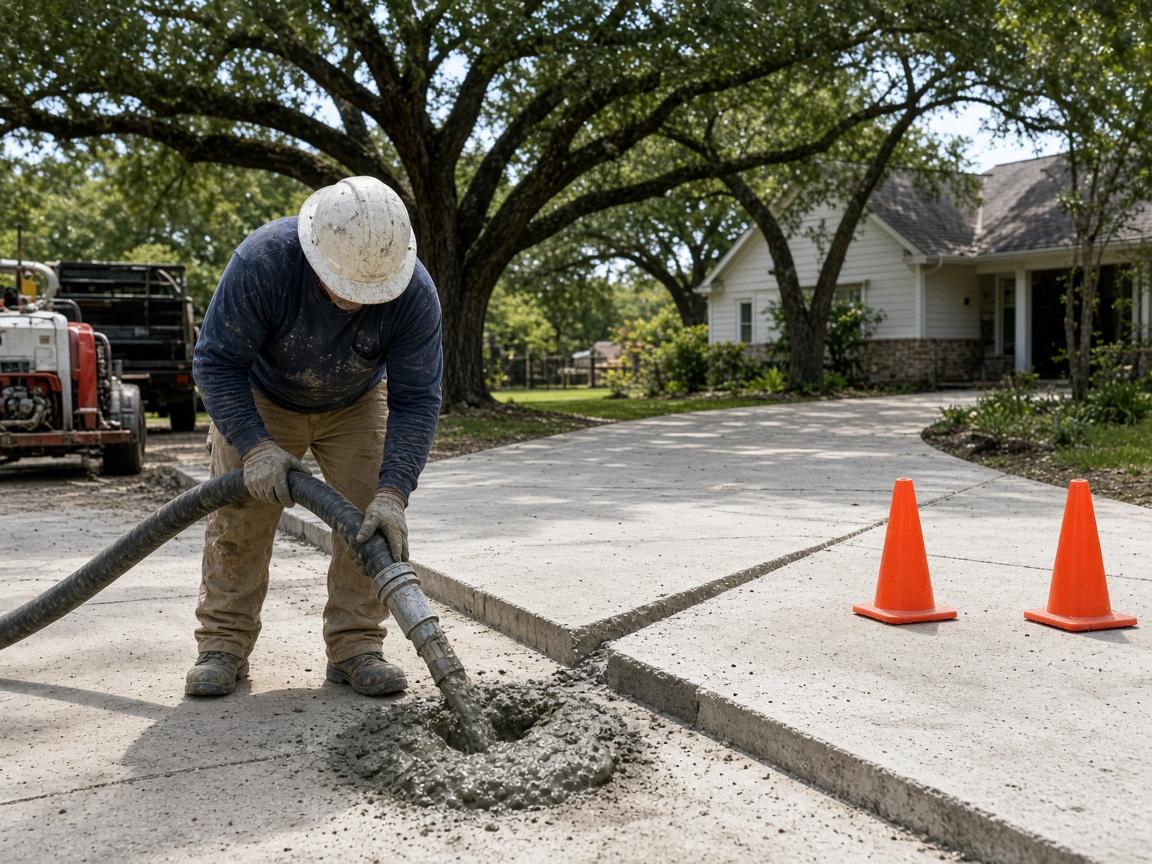
Concrete leveling — through mudjacking or polyurethane foam lifting — is the fastest and most economical way to correct sunken sidewalks, driveways, patios, pool decks, and garage floors in Austin. It's dramatically cheaper than full slab replacement, and when the underlying void problem is properly addressed, it lasts.
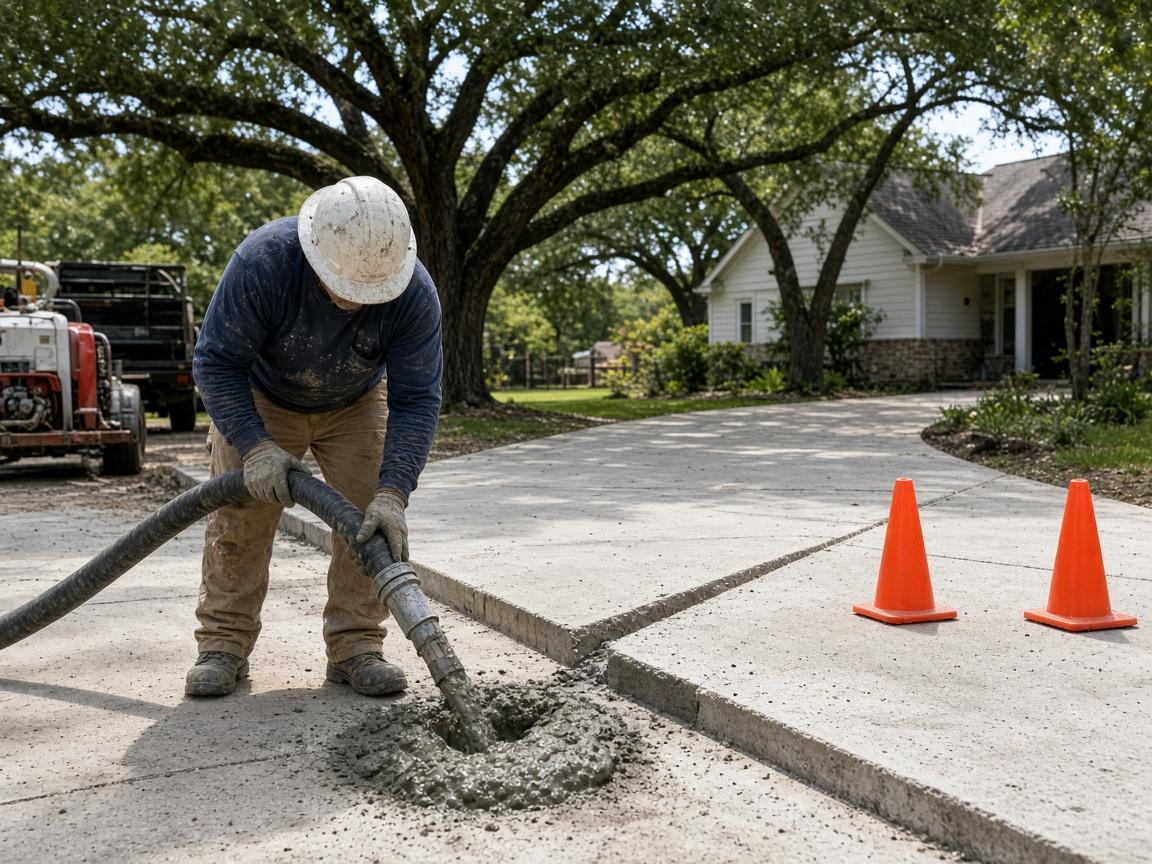
Mudjacking (also called slabjacking) works by drilling a series of small holes through the sunken slab, then pressure-injecting a cement-sand-water slurry beneath it. The slurry fills voids, compresses weak soil, and creates a hydraulic pressure that lifts the slab back to grade. The holes are patched, and the area is back in service within hours.
Polyurethane foam lifting is a newer alternative that uses two-part expanding foam injected through smaller holes. The foam expands to fill voids and lifts the slab with less material and quicker set times. It's particularly useful in areas where minimizing water addition to the soil is important.
Why This Happens in Austin
Concrete slabs outside the foundation — driveways, sidewalks, patios — settle for a simpler reason than foundations: soil erosion and consolidation under the slab. Water washing under a slab creates voids. Organic material below (old tree roots, buried wood debris from construction) decomposes and creates voids. Improperly compacted fill consolidates over years. The slab, unsupported, deflects and cracks.
In Austin, the clay soil factor that makes foundation settlement complex is less of a factor here — exterior concrete slabs typically aren't carrying structural loads, so the repair doesn't need to reach the clay-active zone depth. Filling the void and providing support within the upper soil layers is sufficient.
How the Repair Process Works
- 1Void assessment: We probe the area with a rod to locate voids and map sunken sections. We assess the size of the void and the cause of the settlement to determine the appropriate fill volume.
- 2Hole drilling: 1.5–2 inch holes are drilled through the slab in a pattern calculated to provide even coverage of the void below.
- 3Slurry or foam injection: Slurry (mudjacking) or expanding foam is injected through the holes under controlled pressure. Lift progress is monitored at the slab edges.
- 4Lift control: Injection continues until the slab reaches target grade. We monitor adjacent slabs and structures to prevent over-lift.
- 5Hole patching: Injection holes are filled with mortar and matched to the slab color as closely as possible.
- 6Surface sealing: For driveways and high-use areas, we recommend a joint sealer to prevent future water infiltration through the slab cracks.
Warning Signs You Need This Repair
- Trip hazard lip at the edge of a driveway or sidewalk slab panel
- Visible void under a slab edge — you can see daylight or probe into it
- Water washing into the space below a settled slab after rain
- Pool deck section that has dropped, creating a drainage problem or ledge
- Garage floor section that has settled, creating a door clearance issue
Austin Soil Context
Austin's clay soils don't drain quickly, which means water under exterior slabs takes longer to evaporate. Mudjacking slurry adds water to the subsurface — in highly reactive clay areas, this can cause slight clay swell after injection. For exterior slabs adjacent to the home's foundation, we recommend polyurethane foam lift instead of slurry to avoid the moisture addition.
Frequently Asked Questions
Is mudjacking or foam better for my Austin driveway?
It depends on the situation. For large slabs with significant voids, mudjacking fills volume more economically. For smaller areas, slabs adjacent to the foundation, or situations where soil moisture addition is a concern, foam is the better choice. We'll recommend the right method for your specific situation.
How long does concrete leveling last?
When the underlying soil condition has been stabilized (voids filled, drainage addressed), mudjacked concrete typically stays level for 5–10 years or more. If the soil continues to erode or settle, re-treatment may be needed. We'll tell you honestly if your situation is likely to require ongoing maintenance.
Can you level cracked concrete?
Yes, as long as the slab panels are structurally intact (not broken into small pieces). Cracks that run through the full slab thickness become working joints after lifting — they won't disappear. We can seal the crack after lifting to minimize water infiltration.
Austin Foundation Repair Pros serves Austin and 14 surrounding communities with licensed foundation repair crews. Every repair starts with a free written assessment — no pressure, no surprises, no upselling.
Get a Free Estimate
Tell us what you're seeing. We'll schedule a free on-site inspection and give you a written diagnosis.
Request Estimate Online (512) 601-5288What You Get
- Fraction of the cost of full concrete replacement
- Back in service within hours — no days-long cure wait
- Environmentally responsible — extends the life of existing concrete
- Smaller drill holes versus full breakout and replacement
- Fixes the underlying void — not just the visible symptom
Service Area
Austin and surrounding communities including Round Rock, Cedar Park, Pflugerville, Georgetown, Leander, Kyle, Buda, Hutto, Lakeway, Dripping Springs, San Marcos, Bastrop, Manor, and Bee Cave.